DeWitt attorney Brian R. Smigelski has been named the Best Lawyers® 2027 “Lawyer of the Year” for Construction Law in Milwaukee.
Brian represents businesses, owners, contractors and design professionals in complex construction, business and employment disputes. Known for understanding his clients’ businesses and goals, he provides practical counsel that helps them navigate risk and make important decisions.
Brian is one of 27 DeWitt attorneys recognized in The Best Lawyers in America® 2027.
Read More About Brian R. Smigelski Named Best Lawyers® 2027 “Lawyer of the Year” for Construction Law in Milwaukee
A settlement agreement may resolve a legal dispute, but it can also create unexpected tax consequences. In this article, DeWitt attorneys Averi A. Niemuth and Van U. Donkersgoed discuss a recent U.S. Tax Court decision, explain how the origin-of-the-claim doctrine affects the taxation of settlement payments, and outline practical steps employers, employees and their advisors can take to reduce tax risk before signing an agreement.
Read More About Before You Sign the Settlement Agreement: Don't Overlook the Tax Consequences




 DeWitt attorney Brian R. Smigelski has been named the Best Lawyers® 2027 “Lawyer of the Year” for Construction Law in Milwaukee. Brian represents businesses, owners, contractors and design professionals in complex construction, business and employment disputes. Known for understanding his clients’ businesses and goals, he provides practical counsel that helps them navigate risk and make important decisions. Brian is one of 27 DeWitt attorneys recognized in The Best Lawyers in America® 2027. Read More About Brian R. Smigelski Named Best Lawyers® 2027 “Lawyer of the Year” for Construction Law in Milwaukee

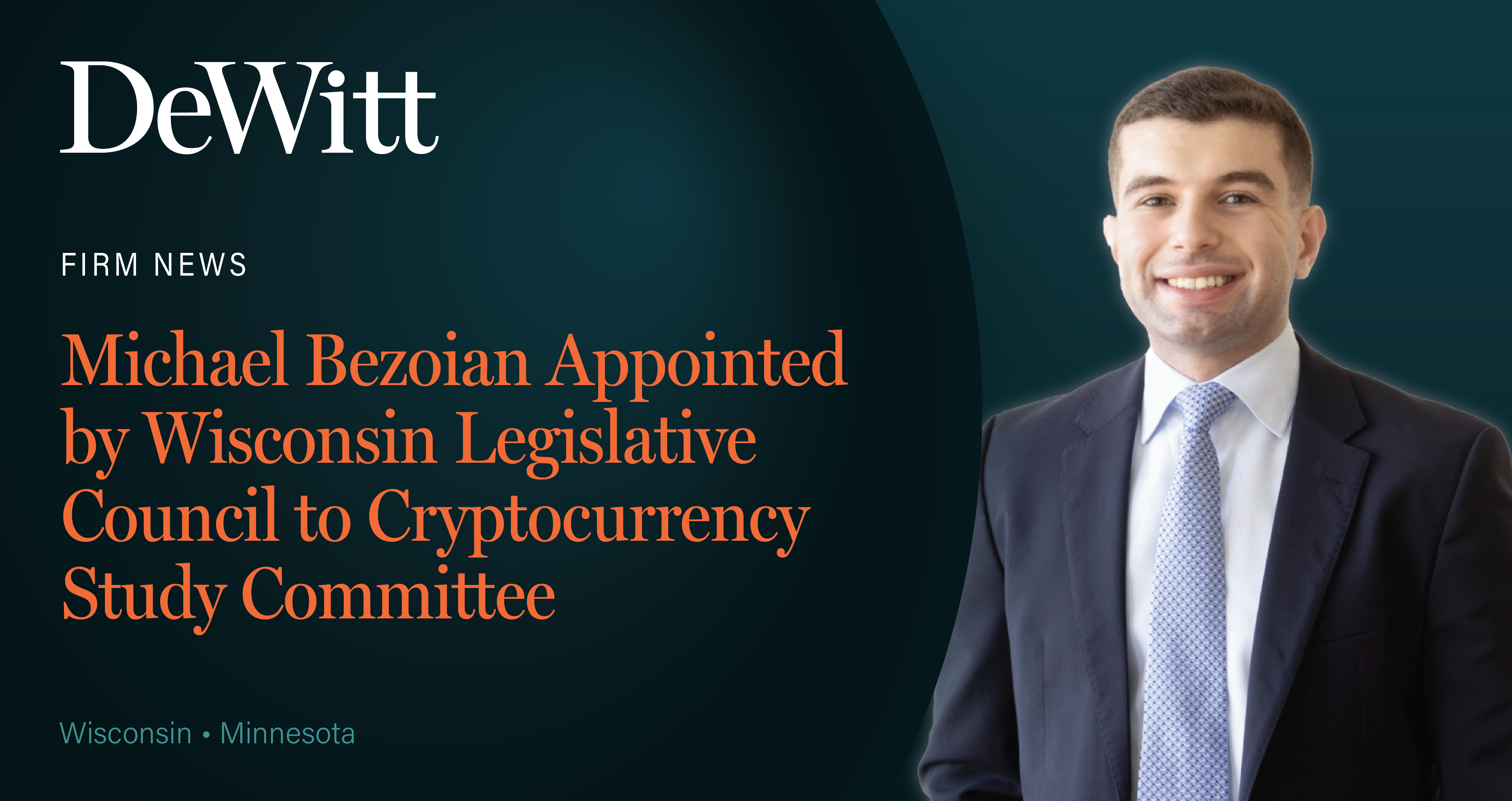 DeWitt attorney Michael Bezoian was appointed to Wisconsin's Legislative Council Study Committee on Cryptocurrency, helping shape discussions on cryptocurrency regulation. Read his latest Wisconsin Lawyer article on blockchain, estate planning, and digital assets. Read More About Michael Bezoian is Helping Shape Wisconsin’s Approach to Cryptocurrencies